Wednesday, January 25, 2012

The Metric System in a nutshell

As I was casually strolling around the classroom, my cooperating teacher came up to me in a hurry and said, "I'm throwing you into something! Are you ready?" Of course I responded, "sure!".

Little did I know, she was throwing me into teaching math 30 seconds from that very moment. The topic of the math lesson was about the metric system...something which I have a basic understanding of but was nowhere near comfortable teaching by myself to 20 students. However, my teacher had an emergency and I needed to take over!

This wonderful image perfectly portrays how myself as well as the rest of my students feel about the metric system. We don't use the metric system very often in America, but the rest of the world does. It is logical, but we don't use it. Hmph.

Fortunately for me, most of the students had some experience working with the metric system before my stellar un-planned lesson. After a 10-minute introduction about how to read a ruler and convert between centimeters, millimeters, meters, etc, I had the students go around the room and measure certain objects. They broke up into partners and worked together to do this. 

Upon reflecting on this lesson, I realized that it would have made much more sense to explain the conversions in powers of 10. In order to convert between units, I should have showed that you simply multiply by 10. Next time I'll tell my class this!


Team building with the mummy game!

Today our class played the mummy game!

             
This was a great way to work on team building and community. Before beginning the activity, my teacher laid down a very strict set of rules. Students were to work with their team (groups of 4) to completely cover their elected "mummuy" from head to toe. EVERYTHING had to be covered...EXCEPT for their mouth and nose. If either of these parts were covered, the team would be disqualified. All students were expected to participate in this activity. If we (the teachers) saw anyone not participating, the team would be disqualified. Once the rules were laid down, students were able to go and have fun! I realized that although the activity is meant to be fun, it is important to be firm when laying out the rules. 


Saturday, January 21, 2012

End of 1st week

Lots to update on. Enjoying getting to know the students and finally know my way around the school!


GREAT math lesson: Introducing a check book
1. Ask, "Who has to do chores?" Go around room and allow everyone to share their chores. Explain that some people earn money by doing chores. In order to keep track of money, adults use checkbooks.
2. Use a magnet to place vocab strips on the board:
      -Balance
      - Transaction (can be a):
            -Deposit OR
            -Withdrawal
      -Interest
    Strips are color coded. Vocabulary that earns you money is green (+) "put it in", while vocabulary that "takes it away" is red.
3. Ask for volunteers to explain each of the terms to the class. Help class get an accurate definition for each.
4. Do an example on the board.


  • Beginning balance is $32.11. Say, "This means, 11 out of_____?" (100) 
  • Write $32.11 on the board.
  • Ahead of time, create strips of paper with actions that earn and lose you money. Put all the strips in a bag. During the lesson, go around the room and have students pull a strip from the bag and read their action out loud. For example, the strips might say "shoveled snow, earned $15.25"
  • Ask, "is this a deposit, withdrawal, or interest?"
  • Write it on the board, get new balance, show all work.
  • Repeat until everyone has read their action strip
  • Ask guiding questions along the way, such as "why am I not subtracting this?", "why should I add this?", "What do you notice I am doing every time I write a number down?" (lining the decimals up).
  • *Let students keep their action strips so you know who hasn't gone yet.
5. Collect cards. Say, "please put your cards up in the air and I will come get them."
6. Hand out checkbooks (worksheets) and write instructions on the board for what they should do when they finish.

The kids LOVED this lesson. They got extremely into it and would get happy/upset depending on what action was drawn from the bag. They were genuinely concerned when their balance was getting low! It shows that it is okay to let the kids have fun during a lesson as long as you can keep them controlled as wel!


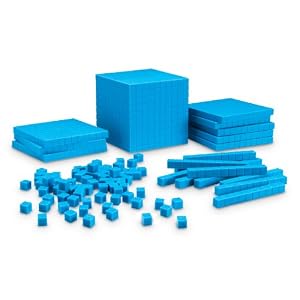
Math lesson: Using base 10 blocks 


-Students were learning about tenths, hundredths, and thousandths, and how to convert them into fractions. Instead of throwing the students directly into their Everyday Mathematics Journals, she took them to the floor and demonstrated each problem with them using the base 10 blocks. This provided them with a roadmap of how they should be thinking when they do the problems.
-When students "got it" they were allowed to go to their seats. The rest could stay and receive more help. Ask these students, "what do you not get?" to allow for specific instruction.


*When teaching this, start by introducing each part as 1/1,000 instead of 1/100. It will make it easier when you need to learn about thousandths.


Behavior management strategy: 30 second blurt!


-During a period of individual work, my teacher could not get the class to settle down and stop talking. To fix this, she said "I'm giving you 30 seconds of talking. When the time is up you will give me ten minutes of silence. GO!"
-The kids LOVED this! Most of them just turned to their neighbor and said "blah blah blah!" but it gave the students who were really talking to get it out of their systems!


Behavior management strategy: Classroom conga line!

After a long morning meeting, the kids were feeling tired and drained and it was only 10:00 AM! To fix this, my cooperating teacher ordered everyone to stand up in the circle,  turn to their right and look at the back of the persons head in front of them, and follow Alex. (I changed his name). She allowed the class to go around the room a couple of times before they voluntarily came back to the circle and sat down. It got their energy going and was funny for us to watch!!


Highlights


Every Friday, students record "highlights" in a black composition notebook. They are required to write:
  1. One thing they learned this week
  2. One way they were kind
  3. One thing they didn't understand
My teacher reads them over and responds to every entry. It is a great way for students to communicate with her.


Buckets 
Better explained on this website: Bucket Fillers


The idea of "filling buckets' is based on the book by Carol McCloud called "Have You Filled A Bucket Today? (A Guide to Daily Happiness For Kids)". The book uses buckets as a metaphor for how a child is feeling. When you hurt someone (by saying mean things or being unkind) you "dip into their bucket" and hurt them. In contrast, when you make someone feel good about themselves (by helping them do something, saying something nice, or being kind to them), you "fill their bucket".


In order to keep things simple, my teacher uses this form: Bucket filler form


"Filling buckets" will be an activity during morning work sometimes, or during free time, or when a student finishes work early. It is a way to build community because it allows students to really see the impact they have on each other. There are white slips to be used when you want to "fill someones bucket", and pink slips to be used when someone has "dipped into your bucket". It is a way to open the communication between students. If a student said something to another student that hurt them, this person will find out when they read their pink slip. The problem can then be addressed and the students can learn from the experience. The goal is that by the end of the year there will be no more pink slips, or no one dipping into each others' buckets. 


My teacher used a hanging shoe rack with plastic sleeves where you would normally insert shoes. Each student colored a picture of a bucket and wrote their name on it. This picture was taped to the sleeve and, voila!, each student has their own bucket. 


My Fun Teacher, 2012. Karen Powell. Accessed 21 Jan 2012 from <http://myfunteacher.com/bucketfillers.htm>


Wednesday, January 18, 2012

Day #2: learning discipline strategies


I'm beginning to realize how much of a handful these students really are. The most important thing that I am currently working on is discipline with the students. Yesterday my cooperating teacher gave me a piece of advice that I hope to remember forever:
           "Don't let the students become your friends."


 She said she has a difficult time doing this because they are such great people, but if you become their friend they will not have the same level of respect for you as a teacher. There is a fine line between students being able to trust their teacher and being friends with their teacher.


  • We had a guest speaker in our classroom today. In my beginner teacher opinion, the students were pretty well behaved. Sure, they were a little chatty, but what class isn't? To my surprise, my teacher had a completely different view on their behavior. After the guest speaker left, she told them how disappointed in them she was. She had them each take out a piece of paper and write down what went wrong with their behavior during the lesson. She further instructed them to confess if they did something wrong, and if not, to make suggestions of what we could have done better. Although it was technically time to move onto the next subject, she required that students turned in their papers before they were allowed to go to reading.
WOW! As a beginning teacher, I would not have thought it feasible to take 2 minutes out of the busy schedule for such an event! We have to get to the next thing!!!! I learned that taking those 2 minutes out of the day can teach a very valuable lesson. Bad behavior will NOT be tolerated in this classroom. BAM!

Tuesday, January 17, 2012

First day of school! Sound vibrations inquiry

Had a great first day of student teaching. Can't wait to get to know the students more!

In attempt to remember all the "good" lessons that I observe my teacher teaching... I will note her science lesson used today. She was teaching about how sound travels in vibrations. In order to do so, she had a small bowl of water and a small, medium, and large tuning forks, like these.

With the students sitting in a circle so all could see, she hit the tuning fork on the ground and immersed it in the water. Immediately, the water splashed up and hit some of the students! The vibrations caused the water to splash out of the bowl. They were fascinated. It was a great way to demonstrate how sound travels and get students excited by science.

The lower-pitched tuning forks provide longer, lower vibrations, resulting in a smaller splash than the higher pitched tuning forks. She also varied the level of vibrations by changing the amount of force used to strike the tuning fork.  For a formative assessment, she asked students how sound travels. Each student understood that sound travels through vibrations and can travel through all types of matter! 

Definitely want to remember this lesson. :)

Monday, January 16, 2012

First Post!

This is my first blog entry! Tomorrow I begin my student teaching in 4th grade. I'm very excited and a little nervous! I hope to keep this blog updated with all the things I learn from my cooperating teacher as I complete my student teaching.

This is the bioboard I created to introduce myself to my students:


I also bought them "Smarties" in effort to encourage them to show me how smart they are!